The 1033 exchange, in plain English.
When your property is taken, the tax code treats the payment like a sale, even though you never chose to sell. Section 1033 exists because Congress recognized that difference. If you reinvest what you were paid into qualifying property within a set window, you can defer the capital gains tax instead of paying it in the year of the taking.
If someone has told you to look into a 1033 exchange, this is what they meant, and there is a deadline attached to it.
This page explains the 1033 exchange rules in plain language: who qualifies, how the time limit really works, what qualifies as replacement property under Section 1033, and the paperwork details that decide whether the relief is available at all. The primary source for everything here is IRS Publication 544, Sales and Other Dispositions of Assets.
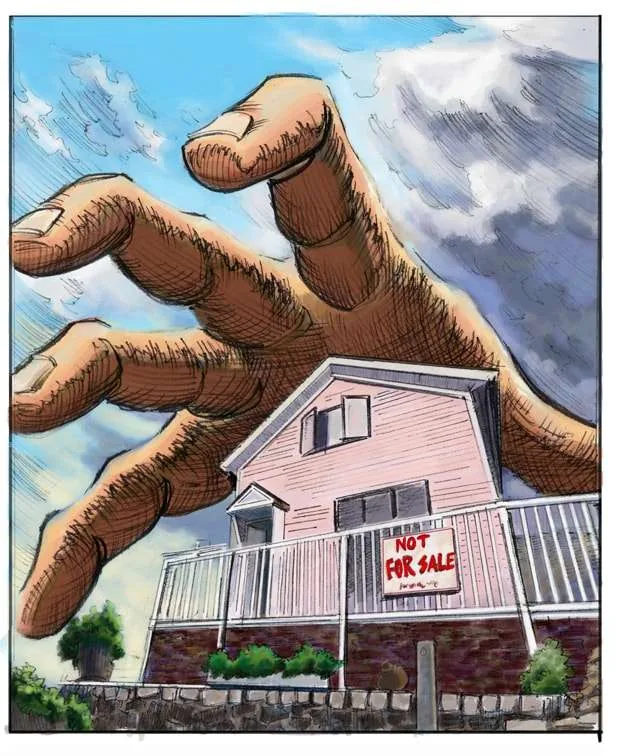
Who a section 1033 exchange applies to.
The code calls these events involuntary conversions. The common thread is that someone or something else forced the disposition, and the owner did not set the timing or the price.
Condemnation
Property taken through eminent domain for public use, whether the compensation was set by agreement, by a commission, or by a court. This is the classic case, and it includes partial takings such as right-of-way and easement acquisitions in many situations.
Threat of condemnation
A sale made after a genuine, communicated threat that the property would otherwise be taken. No case has to be filed. The threat and the owner’s reasonable belief in it are what matter, and both need to be documented in the file.
Other involuntary conversions
Section 1033 also covers property destroyed in whole or in part, stolen, or otherwise converted against the owner’s will, where insurance or other compensation creates a gain. The mechanics on this page focus on takings, but the framework is the same.
The 1033 exchange time limit is not what most owners assume.
The replacement period does not begin when the property is taken. That single fact is behind most missed 1033 exchanges.
When the clock starts
The period begins on the first day of the tax year after the year the gain is realized. Not the day of the notice, not the day of the taking, and not the day the check arrives. Because compensation often lands in a different year than the taking itself, the true start date takes analysis to pin down.
How long it runs
From that delayed start, the window generally runs two years, three years for condemned real property held for business or investment, and up to four years for property in a federally declared disaster area under Section 1033(h). IRS Publication 544 sets out the periods. Extensions exist only by application to the IRS and are granted at its discretion, which is not a plan.
Why owners miss it
The delayed start makes the deadline feel further away than it is, so replacement property shopping gets deferred. Then the window closes, the entire gain is recognized in a single year, and there is no way to reopen it. Knowing the real end date on day one is most of the battle.
The property is condemned, or sold under a documented threat.
Proceeds arrive and the gain is realized, often a different year than the taking itself.
The first day of the tax year after the gain year. Not the day of the taking. This delayed start is exactly why owners miss the deadline.
The standard replacement window for most involuntary conversions.
For condemned real property held for business or investment.
For property in a federally declared disaster area, under Section 1033(h).
Periods run from the delayed start, not the taking. Which window applies depends on how the property was held and how it was converted, confirmed with your CPA against IRS Publication 544.
What qualifies as replacement property under Section 1033.
The general standard is that replacement property in a 1033 exchange must be similar or related in service or use to what was taken. For owner-used property that standard is applied narrowly: the way you used the old property and the way you will use the new one should match. A warehouse an owner operated is not automatically replaced by a rental office building.
For condemned real property held for business or investment, the code allows the broader like-kind standard, which covers most real estate replacing most real estate. This is one of the most owner-friendly parts of the rules, and one of the most commonly misunderstood, because which standard applies depends on how the property was held and how it was converted.
Timing, documentation, and cost matter too. Generally, gain is deferred to the extent the proceeds are reinvested. Amounts not reinvested are typically recognized. The acquisition needs to close inside the replacement period, and the election and supporting records travel with the tax return. The election is reported on Form 4797 with a Section 1033 election statement, not Form 8824, which is the form for 1031 like-kind exchanges. IRS Publication 544 covers the reporting.
Partial takings: when only part of the property is taken.
In many takings, a road widening, a pipeline, or a utility corridor, the government acquires a strip or a portion rather than the whole parcel. The tax math is apportioned. Your cost basis is divided between the portion taken and the portion you keep, and the gain is the payment for the taken portion minus the basis assigned to it. A small strip can still carry a large share of the property’s value, so the size of the taking in acres says little about the size of the gain.
Severance damages complicate this further. They compensate you for the loss in value to the property you keep, not for the property taken, and they generally follow different rules: they typically reduce the basis of the retained property first, and only the excess above that basis becomes gain. Whether a payment is treated as part of the award or as severance damages depends on how the settlement describes and allocates it, which is why the same total payment can produce different tax outcomes depending on the paperwork.
None of this apportionment happens automatically. It is built from the settlement documents, the appraisal, and the basis records, and it works best when the attorney, the CPA, and the tax review are looking at the same file before it is final. That coordination is what working with your team looks like in practice.
1033 exchange vs 1031 exchange, briefly.
Both defer gain when one property is replaced with another, but they cover different events. A 1031 exchange is for a sale the owner chose to make, and its mechanics are strict: proceeds must be held by an intermediary and the timelines are short. A 1033 exchange is for a disposition the owner did not choose. The owner may hold the proceeds directly, the replacement window is measured in years rather than months, and no intermediary is required.
A full side-by-side comparison is coming to Insights.
Settlement language and award allocation decide whether the relief is actually available.
How your award is allocated, whether the file documents the taking as involuntary, and when the proceeds are received all determine your tax, and all of them are settled in the paperwork before anyone reviews it. The most valuable provision in the code for this exact circumstance can be unavailable because of how a document was worded. That review is the core of what we do, working alongside your attorney and CPA.
Your attorney fights for the award. Your CPA reports the outcome. We make sure your settlement dollars go where they should.
Who educated you on all your options to legally defer, reduce, or eliminate the taxes on your award before it is too late? It is not your attorney’s job. It is not your CPA’s job. Who is doing that for you?
1033 exchange rules, answered.
Short, plain answers drawn from IRS Publication 544. Every situation is different, always confirm specifics with your attorney and CPA.
A 1033 exchange is the common name for an election under Section 1033 of the Internal Revenue Code. It lets a property owner defer capital gains tax when property is taken by condemnation, sold under threat of condemnation, or otherwise involuntarily converted, if the proceeds are reinvested in qualifying replacement property within the replacement period. IRS Publication 544 is the primary source on how it works.
The replacement period begins the first day of the tax year after the year the gain is realized, not the day the property is taken. From there it generally runs two years, and three years for condemned real property held for business or investment. Extensions exist only by application to the IRS and are granted at its discretion.
The general standard is property similar or related in service or use to what was taken. For condemned real property held for business or investment, the broader like-kind standard applies, which covers most real estate replacing most real estate. Which standard applies depends on how the property was held and how it was converted.
Generally the gain can be deferred to the extent the proceeds are reinvested in qualifying replacement property within the period, with a proper election on the return. Amounts not reinvested are typically recognized as gain, and portions of an award such as interest can be taxed as ordinary income regardless of reinvestment.
The entire deferred gain is recognized, all of it, in that tax year. There is no automatic grace period. Relief after the fact requires asking the IRS for a discretionary extension, which is not something to plan around. Knowing the real end date early is the practical protection.
It can. A sale made after a genuine, communicated threat that the property would otherwise be taken can qualify even if no case was ever filed. The threat and the owner’s reasonable belief in it need to be documented, ideally before the sale closes, because that evidence is hard to reconstruct later.
Gross proceeds, and only that. The form does not establish your cost basis, your gain, or whether a Section 1033 election applies. Your tax return has to reconcile the form with the settlement documents, which is far easier when those documents were reviewed with the tax outcome in mind.
Possibly. Because the replacement period starts the year after the gain is realized, many owners who have already settled are still inside the window. What remains open depends on the settlement language, the documentation of the taking, and the calendar. A short review establishes where you actually stand.